

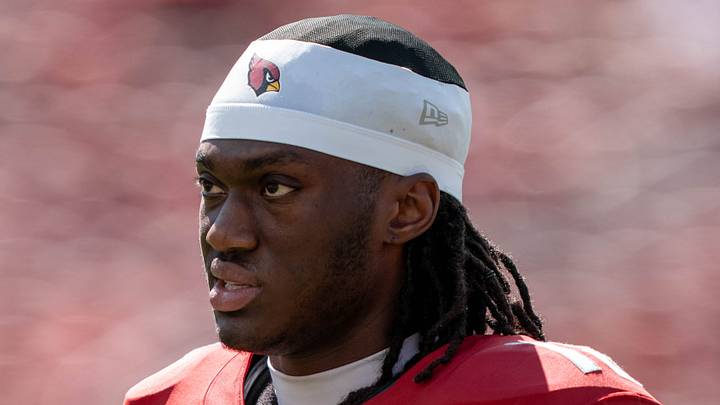
The Arizona Cardinals officially traded Jacoby Brissett to the Baltimore Ravens on Friday. Between the Marvin Harrison Jr. trade with the Houston Texans and the Brissett trade with the Ravens, Cardinals GM Monti Ossenfort has at least recouped draft capital from his past mistakes.
Arizona sent Harrison and a 2027 sixth-round draft pick to Houston, receiving a 2027 second-round draft pick and a 2027 seventh-round pick in exchange. They took a similar approach in their trade with Baltimore, essentially trading up a round. This time, the Cardinals traded Brissett and a 2027 fifth-round pick to the Ravens in exchange for a 2027 fourth-round pick and a 2028 seventh-round pick.
It's underwhelming returns when you consider Harrison was a top five draft pick and the Cardinals just gave Brissett a $10 million raise this offseason to be the team's starting quarterback. However, when you look at how little Harrison and Brissett were producing in the Cardinals' offense, it's actually impressive they came away with this much draft capital.
Texans are betting Cardinals failed Marvin Harrison Jr.
The truth likely falls in between. Arizona's rebuild still took a huge step backward when they missed on this Harrison pick. The Texans were happy to take a second-round flyer to see if Harrison could unlock more of that star potential by reuniting with former Ohio State teammate C.J. Stroud.
Meanwhile, the Ravens were happy, desperate even, to take Brissett off the Cardinals' hands after the potentially season-ending injury suffered by Lamar Jackson, who underwent surgery for a right thumb injury. We just saw the extent of that desperation Thursday, when the Ravens, led by undrafted rookie Joe Fagnano at quarterback, fell 33-10 to the Jacksonville Jaguars.
But while these were good-value trades given their current lack of production in Arizona, we can't help but feel the Cardinals made them in the wrong order.
Cardinals got Marvin Harrison Jr. and Jacoby Brissett trades backward
A huge reason why Arizona was willing to trade Brissett for so little was that he's on an expiring deal and fell to QB3 in the depth chart after Mike LaFleur named Gardner Minshew II the starter for Week 9 against Seattle. That already looks like the right decision, both in terms of the benching and the trade, as this Cardinals offense looked much more explosive under Minshew, who also seemed to be a better overall fit for LaFleur's system.
We've already seen pass catchers like Michael Wilson benefit from that switch at quarterback. He finally looked the part of a true WR1 for Arizona in their comeback win against Dallas, finishing with a season-high 111 receiving yards and a touchdown.
Not to say that production will continue at that level, especially now facing a stout Seattle secondary. Still, the fact that Wilson received 15 targets against the Cowboys was telling about the connection he's already established with Minshew. It shows how important that connection is for a receiver's production.
One example that comes to mind is how much Justin Jefferson struggled with J.J. McCarthy and, to a lesser extent, Kyler Murray. The Minnesota Vikings are now making that swap from Murray to Carson Wentz for Week 9, partly because of Murray's injury and partly because Wentz is a better fit to unlock pass-catchers like Jefferson in Minnesota.
Why didn't the Cardinals see whether Minshew, or even rookie Carson Beck for that matter, were more compatible with Harrison before trading him to Houston?
Cardinals were wrong to prioritze Jacoby Brissett
It seemed like the relationship between Harrison and the Cardinals was pretty tarnished as well, which likely played a role in terms of the sense of urgency to ship him elsewhere. Then again, why are the rebuilding Cardinals sabotaging a relationship with someone they took No. 4 overall just a few years ago?
Trading Harrison over Brissett prioritizes a veteran stopgap quarterback with one year left on his deal over a top-five draft investment who's still just 24.
The Texans clearly believed Harrison's struggles had more to do with his environment in Arizona than his ability to produce at the NFL level; otherwise, they wouldn't have given up that second-round pick on someone who hasn't produced like a second-round pick. It's the Texans taking a leap of faith, or having more confidence they'll be able to unlock Harrison better than the Cardinals, and, well, they likely aren't wrong.
Time will tell how much Harrison truly pans out in Houston. The Texans are coming out of their Week 8 bye and finally have more time to integrate him into the offense, so it's reasonable to expect his production to increase.
Maybe the Cardinals were better off moving on from Harrison while they still could, selling high on what he could become rather than the reality of who he is now. But that's a steep risk for Arizona to take, since it's clear he hasn't been put in the ideal situation to succeed since they drafted him.
Why not at least see if Minshew would've helped unlock Harrison before trading him away so willingly? The Cardinals got these trades backward, and they may never have had to trade Harrison in the first place if they'd given him a chance without Brissett. There clearly wasn't a connection there, with Brissett rarely even looking his way.
 Add us as a preferred source on Google