

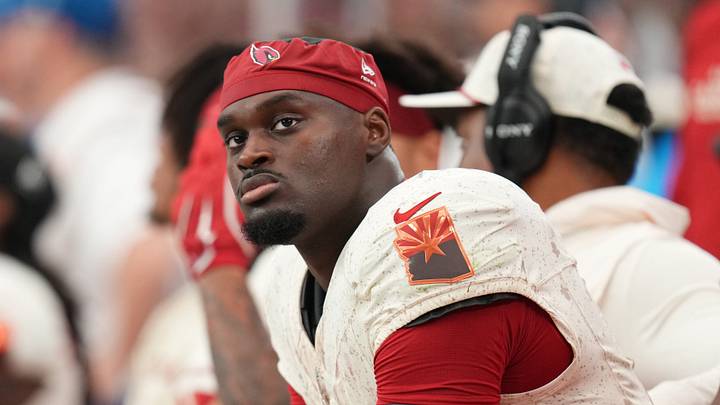
Rookie running back Jeremiyah Love led the Arizona Cardinals backfield in touches in their Week 2 loss to the Seattle Seahawks. He still totaled just 12 touches, including nine rushes for just 29 yards.
That's nine carries, three targets, and, most concerningly, a 40 percent snap share for the Cardinals' steep No. 3 overall draft investment. It would be one thing if he weren't involved in the offense, but Love somehow isn't even finding the field?
That was similarly the case in their season opener against the Los Angeles Chargers. However, we gave Arizona the benefit of the doubt, seeing as they pulled off the upset and Love was still coming back from a high-ankle sprain suffered in the preseason.
This Seahawks loss is far more concerning and revealing about how Mike LaFleur and the Cardinals plan on managing Love's touches going forward.
Preserving their draft investment is one thing, and a key reason why we applauded the underrated offseason signing of former Atlanta Falcons running back Tyler Allgeier. There's no reason for Love to be a full-on bellcow in what is essentially already a lost season for the Cardinals in terms of their playoff chances in the loaded NFC West.
Still, Arizona needs to find a better balance going forward, since there's no reason their best offensive weapon should be seeing 40 percent of the snaps in a game where they struggled to get anything going.
Cardinals must increase Jeremiyah Love's role going forward
It was an encouraging first half, with the Cardinals' defense holding the Seahawks' offense to 7-7 tie. The damn burst in the second half as they could no longer contain Jaxon Smith-Njigba. Arizona needed to counter that with offensive firepower of its own -- something you would think wouldn't be an issue after top-five draft investments in not only Love but also Marvin Harrison Jr. Instead, they both largely became afterthoughts.
Harrison's performance was an even bigger red flag for Arizona, failing to bring in his only target. Still, it's understandable if Harrison has fallen down the offensive hierarchy after his lack of production the first two seasons, especially since the Cardinals have a plethora of pass-catching options. Love is another situation entirely, as he's looked the part of a top pick when given the opportunity.
Game script may have played a role in this one, particularly in the second half as the game became out of reach. But what about the first half, when the Cardinals' defense kept them in it? Not to mention, Love's a strong three-down back who should've seen more targets even in obvious passing-down situations.
Preserving their talent for when this team can become contenders is one thing. But if the Cardinals aren't even going to use their offensive weapon in a game where they are clearly struggling to generate anything, it raises the question: what was the point of this pick?
Credit the elite Seahawks defense for containing both Arizona's ground game and passing attack. Mike LaFleur called them the best defense in the league before the game, and they certainly looked the part. But it was also unfortunate that the Cardinals didn't decide to fight fire with fire.
In those limited touches, Love seemed like one of the few offensive players capable of keeping up with the speed of Seattle's defense. In a game where Plan A was clearly not working for Arizona, why not experiment with your newest offensive weapon?
LaFleur and the Cardinals kept the Ferrari in the garage too often, and the offense stalled because of that conservative decision. With the high ankle sprain now behind Love, there's reason to believe this is just how their offense will operate going forward as they continue to preserve their draft investment.
Still, seeing how badly this offense needed Love's dynamic playmaking in Week 2, there must be a better balance. There's no reason Love shouldn't see at least most snaps, so hopefully that shifts in Week 3 against the San Francisco 49ers.
 Add us as a preferred source on Google