

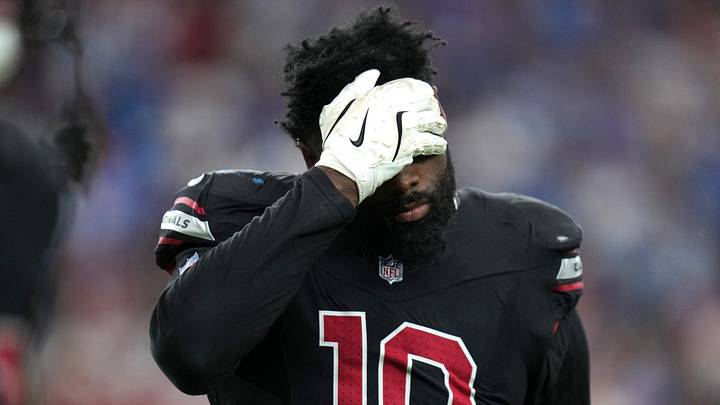
The Arizona Cardinals were blown out Sunday, falling 34-6 to the Los Angeles Rams.
A loss unfortunately felt inevitable, with the Cardinals limping into the contest as massive underdogs. It was Carson Beck's starting debut, which actually went better than his stats or the final score would suggest.
Arizona is now on its third quarterback, and Jacoby Brissett, Gardner Minshew II, and now Beck have all struggled. The supporting cast around them has only gotten worse, with a depleted offensive line and few reliable pass-catchers remaining outside of tight end Trey McBride.
But now the Cardinals sit at 3-7, even further out of the NFC West, with another loss to a divisional rival. That's likely going to be 3-8, with Arizona heavy underdogs again in a difficult Week 11 matchup against the Kansas City Chiefs.
Arizona has exceeded expectations with three upsets this season but seems to have hit a roadblock midseason, with injuries they're not well-equipped to overcome. They seem on track to finish right around the four- or five-win team we projected them to be at the start of the season. But if we knew all this before the trade deadline, with the key injuries happening before it, why weren't the Cardinals more aggressive sellers?
Cardinals should've traded more pieces to help their rebuild
Arizona did trade Marvin Harrison Jr. to the Houston Texans and Jacoby Brissett to the Baltimore Ravens. However, in retrospect, those seem like individually unique situations rather than GM Monti Ossenfort taking a firm seller's stance. Harrison seemed disgruntled from his minimal role and lack of production, while Brissett was demoted to QB3 by head coach Mike LaFleur. That unfortunately didn't mean Ossenfort would keep flipping players into future assets to further embrace the rebuild.
Cardinals defensive veterans Budda Baker and Josh Sweat were the two headliners to survive the deadline in Arizona, though a few others made sense to shop with contracts set to expire. Ultimately, Ossenfort decided to stand pat, a decision that already isn't aging well as the Cardinals fall further behind in the NFC West.
It's a predictable outcome, one that may have gotten accelerated with all the injuries. Still, it was only a matter of time before Arizona was out of the playoff picture and turning to Beck to evaluate what they have at quarterback.
It's understandable to want to keep Baker given what he means to this organization as the franchise icon at safety. But unfortunately, that leadership doesn't seem to translate into much production for the defense as a whole. It's hard to fault Baker when there a bigger problems at scale, but it would be easier to address these roster flaws if the Cardinals kept stockpiling draft picks.
They could've prioritized the long-term outlook while keeping Baker as that veteran presence if they wanted. Just look at how the Indianapolis Colts navigated the rebuild and the fire sale they had despite retaining Daniel Jones and Jonathan Taylor. Ossenfort should've followed a similar blueprint, as the Cardinals weren't competitive enough yet to be considered a genuine playoff threat.
There's something to be said for wanting to build a winning culture under first-year head coach Mike LaFleur. But that's already not going well with the pieces they have. This roster needs more talent, and the best way to get it is to embrace the rebuild and build through the draft. Each loss Arizona takes from here on out will only make that trade-deadline stance even more puzzling.
 Add us as a preferred source on Google