

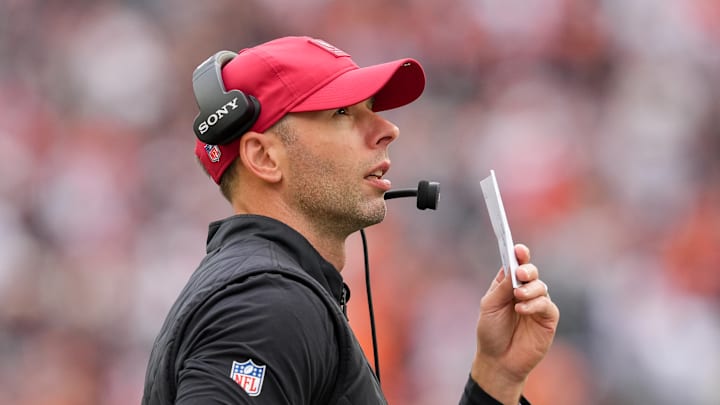
For the Arizona Cardinals, the last three years were meant to establish a foundation. Instead, they clarified where the cracks are, and more importantly, what cannot be compromised again when selecting the next leader.
Michael Bidwill’s comments framed the decision as deliberate, rather than impulsive.
“I wanted 17 games over the 18 weeks to make that decision,” Bidwill said, emphasizing patience, evaluation, and fairness. That patience ultimately led to clarity. The Cardinals weren't trending toward consistency, competitiveness, or identity.
“The wins and losses speak for themselves,” Bidwill added, acknowledging that progress without results has a shelf life in today’s NFL.
From a roster standpoint, Arizona isn't starting from zero. There are legitimate building blocks on both sides of the ball. While the situation under center remains a question with Kyler Murray, the offensive core still revolves around Marvin Harrison Jr, whose presence could heavily influence the coaching search. While GM Monti Ossenfort stated that “all options are on the table" in regards to his signal-caller, the reality is that Murray’s contract and talent level make him a central variable, not an afterthought. Meaning, any incoming head coach has to have a clear plan for maximizing him, whether through structure, protection, or schematic flexibility.
Around Murray, the Cardinals have pieces that matter. Harrison Jr., despite an up-and-down first two seasons, profiles as a foundational receiver. Trey McBride is one of the games elites at tight end, James Conner remains one of the league’s most reliable tone-setters when healthy, and how about the showcase of talent from Michael Wilson this fall? There are bright spots, folks.
Defensively, there is youth and draft capital invested, even if the production has lagged behind expectations. More talent is needed, surely, but there have been flashes to build on no matter who leads the group in 2026 and beyond.
But as we pull the layers back, what the Gannon era ultimately taught Arizona is that alignment matters more than résumés that were masked by immense talent in other locations.
Defensive pedigree alone does not guarantee defensive results. Culture buzzwords do not override Sundays.
The next head coach must bring adaptability, not rigidity, and must be able to bridge development with weekly competitiveness. The bottom line? The Cardinals can't afford another hire that needs three years to figure out what the roster is telling them.
Bidwill acknowledged that Gannon “made us better,” but also admitted the organization felt it was “going in the wrong direction.” That distinction is critical, as improvement without trajectory is not progress.
For Ossenfort, the search is as much about self-scouting as it is external evaluation. The Cardinals now know what doesn’t work. They’ve seen how quickly momentum can evaporate without substance behind it. With cap flexibility, draft assets, and a roster that is closer to competitive than its record suggests, Arizona’s next hire must be decisive, demanding, and detail-driven.
This is no longer about rebuilding in the desert. It’s about building correctly.
 Add us as a preferred source on Google