

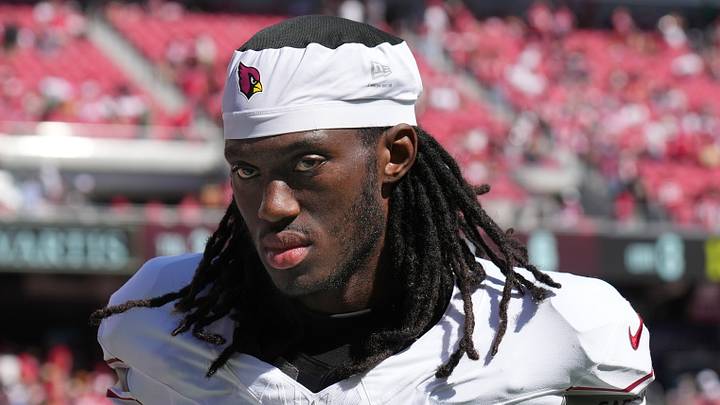
The Arizona Cardinals traded Marvin Harrison Jr. to the Houston Texans, coming away with a second-round pick despite his lack of production. Houston was betting on Harrison benefiting from a change of scenery and his previous connection with quarterback C.J. Stroud dating back to their time as teammates at Ohio State.
It also seemed like the Texans were betting against the Cardinals in a way. Harrison failed to meet lofty draft expectations as a top five pick, though it was fair to wonder how much of that was also on the Cardinals' organizational failure to unlock him.
General manager Monti Ossenfort has a bad drafting track record, and the Harrison pick is high up on that list after they officially moved on from him after just two and a half seasons. It's gotten so bad that it's hard to get excited about the picks he's stockpiling in these deals because you've already seen what they turn into on the other side.
That said, Ossenfort at least deserves credit for pulling the plug on the Harrison experiment when he did. That way, the Cardinals were still able to sell relatively high on the theory of Harrison the player, just a few years removed from being a top-five pick.
Marvin Harrison Jr.’s struggles in Houston show why the Cardinals traded him
Now the Texans are seeing that the reality of Harrison is far less productive, frustratingly so, than the idea of him as a player. His inability to create separation was the most glaring red flag during his Cardinals tenure, and his past connection with Stroud hasn't really helped in that regard.
Now, through three games with the Texans, Harrison has just 60 yards and one touchdown, catching three of his six targets. Some of that low production was because Harrison is still acclimating to the new offense. But those expecting him to become more of a focal point after Houston's Week 8 bye had to have been underwhelmed.
The Texans extended the Los Angeles Chargers' losing streak to eight in a 44-22 blowout win on Sunday. The Chargers' defense had no answer for Stroud, who finished with 384 passing yards, five touchdowns, and one interception. Connecting the dots, you'd assume Harrison would be more involved in the offense and have a breakout game, right?
Instead, it was other pass catchers outside of Nico Collins stepping up for Houston, with Kayshon Boutte and Tank Dell each exceeding 100 yards and combining for a total of three touchdowns. Meanwhile, Harrison found himself still low in the offensive hierarchy, bringing in just two of three targets for 20 yards.
The fact that Stroud had that strong of a performance and Harrison still wasn't involved in the offense coming out of the bye has to be concerning for Houston. There was certainly risk involved as they bet more on Harrison's upside rather than the player he currently was producing. He still has time to improve at 24, but the fact that he looks more or less like the same player we saw on the Cardinals should be reassuring for Arizona.
Trading away Harrison was a bold decision, since he could make them look foolish if he turned into a star elsewhere. But with Harrison still struggling to emerge in an explosive offense like the Texans' in Week 9, it suggests the problems were more about the prospect the Cardinals selected than their inability to unlock him.
Again, that's not a great sign for Ossenfort when it comes to evaluating these draft prospects. But it is further evidence that the Harrison trade was a calculated risk for the Cardinals. Coming away with a second-round pick for someone who was failing to produce in this offense was good value, and we're seeing why, with him failing to assert himself in the Texans' offense now, too.
 Add us as a preferred source on Google